Building Independent Learners
Reducing Over-Reliance on Adults & Strengthening Pupil Agency
1. Why Independence Matters
The Bigger Picture
Independence in learning:
- Builds confidence and resilience
- Develops problem-solving skills
- Strengthens executive functioning
- Supports inclusion
-
Prepares children for secondary school and beyond
When children rely solely on the teacher:
- Cognitive load increases for adults
- Peer collaboration reduces
- Learning stamina decreases
- Learned helplessness can develop
Promoting structured independence helps children feel capable rather than dependent.
2. Our Independence Strategies
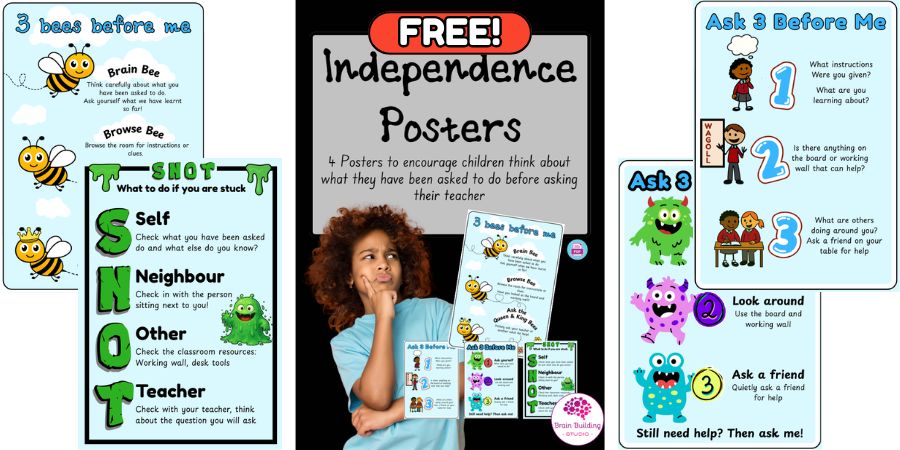
🐝 3 Bees Before Me
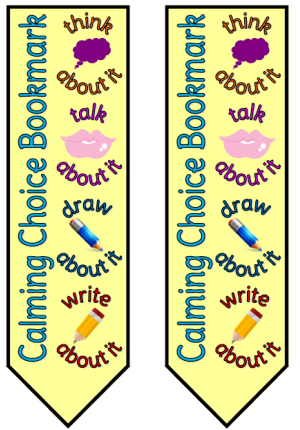
Brain → Book → Buddy
Children are encouraged to:
- Brain – Think carefully first
- Browse – Use classroomdisplays and resiuecea
- Buddy – Ask a peer
Impact:
- Encourages metacognition
- Promotes resourcefulness
- Strengthens peer learning
- Reduces immediate adult reliance
Ask 3 Before Me
Before approaching the teacher, pupils:
- Ask three peers
- Check three resources
- Try three strategies
Impact:
- Builds collaborative classroom culture
- Develops communication skills
- Encourages self-advocacy
- Normalises problem-solving struggle
SNOT Strategy
SNOT = Self, Notes, Other, Teacher
- Self – Have I tried independently?
- Neighbour – Ask a firend or learning partmer
- Other – Check the classroom resources
- Teacher – Now I seek adult guidance.
Impact:
- Structures help-seeking behaviour
- Teaches escalation of support
- Reduces impulsive adult dependence
- Supports executive function development
3. Why This Approach Works (Evidence-Informed Practice)
These strategies are aligned with principles from:
- Lev Vygotsky – Social learning and scaffolding
- Carol Dweck – Growth mindset and productive struggle
- Education Endowment Foundation – Metacognition and self-regulated learning
Research shows that:
- Peer interaction enhances retention
- Metacognitive prompts improve attainment
- Structured independence improves long-term learning outcomes
4. Benefits for Different Learners
For Children with SEND
- Clear visual prompts reduce anxiety
- Structured help-seeking supports communication needs
- Predictable routines build confidence
- Reduces over-dependence on adult scaffolding
For Children with ADHD or Executive Functioning Needs
- Breaks down problem-solving steps
- Encourages pause-and-think responses
- Supports impulse control
For All Learners
- Develops resilience
- Encourages collaborative classrooms
- Builds leadership in peer support
5. What This Looks Like in Practice
- Visual posters displayed in every classroom
- Explicit teaching of independence routines
- Adults redirecting to strategy language
- Celebration of independent problem-solving
Instead of:
“Miss, I don’t get it.”
We hear:
“I’ve done Brain and Book — can you help me with the Buddy step?”
6. The Long-Term Vision
By embedding these strategies consistently, we aim to:
- Create confident, self-directed learners
- Reduce learned helplessness
- Build inclusive classroom communities
- Prepare children for increasing academic challenge
Independence is not about removing support.
It’s about teaching children how to access it effectively.