 Why Start and End Time Tools Support Learners with Autism and Dyslexia
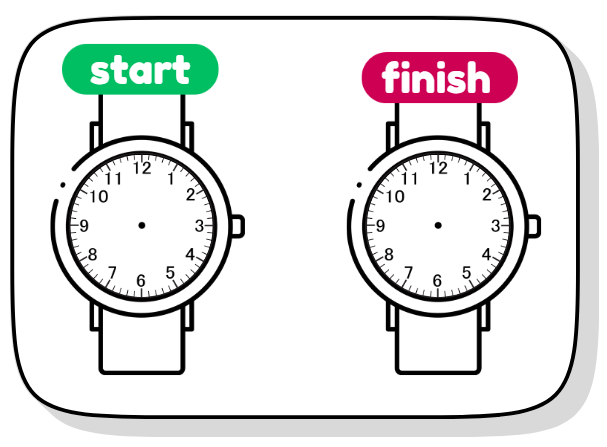
Understanding when an activity starts and when it will finish can be a significant barrier for children with autism and dyslexia. Start and end time tools, using clear analogue timelines and clock-face visuals, make time visible, predictable, and manageable, reducing anxiety and supporting engagement.
 Making Time Concrete and Predictable
For many learners, time is an abstract concept. Visual start and end tools turn time into something concrete and observable.
-
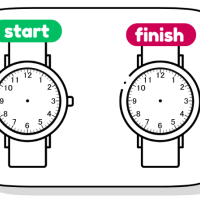
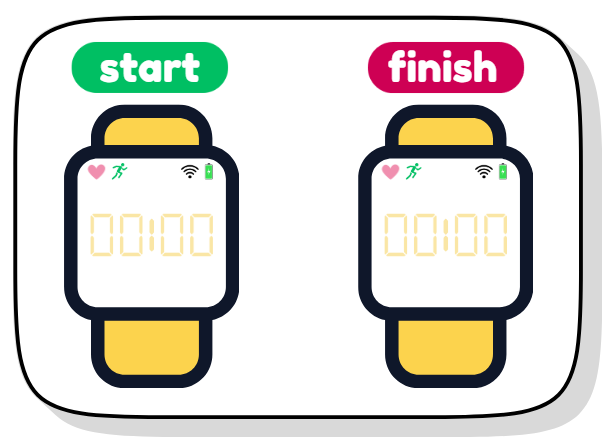
The start point shows exactly when an activity begins
-
The end point clearly signals when the task will be finished
-
The visual space between helps children see how long the activity will last
This predictability is especially important for autistic learners, who often experience anxiety when outcomes or durations are unclear.
Supporting Autistic Learners
Children with autism may find transitions, uncertainty, and open-ended tasks stressful. Start and end time tools support them by:
-
Reducing anxiety through clear expectations
-
Supporting transitions, as children can prepare for change
-
Improving task initiation, because the start is clearly defined
-
Preventing overload, as the activity has a visible, finite end
Knowing there is a clear end helps children remain regulated and engaged throughout the task.
Supporting Dyslexic Learners
Dyslexic learners may struggle with processing speed, working memory, and time estimation. Start and end time visuals reduce cognitive load by removing the need to internally track time.
-
Supports focus, as attention can remain on the task rather than the clock
-
Reduces working memory demands, by externalising time
-
Encourages task persistence, because progress can be visually monitored
-
Builds independence, as children rely less on adult reminders
This allows dyslexic learners to engage more confidently with tasks, particularly written activities.
Supporting Getting Started
Starting a task can be as challenging as finishing it. Visual time tools support initiation by:
-
Clearly marking “now we begin”, reducing hesitation
-
Making expectations explicit rather than verbal
-
Removing ambiguity around how long effort is required
When children know exactly what is expected and for how long, they are more likely to begin promptly.
Reducing Stress Around Completion
Many children experience stress as an activity nears completion, especially if they are unsure how much time remains. Analogue and clock-face tools:
-
Show how much time is left, not just how much has passed
-
Reduce panic or rushing
-
Support calm endings and smoother transitions
This helps children complete tasks feeling successful rather than overwhelmed.
An Inclusive, Low-Threshold Tool
Because start and end time tools benefit all learners, they align with inclusive and trauma-informed practice. They are particularly effective for children with SEND, ADHD, EAL, executive functioning difficulties, or anxiety, while also improving whole-class regulation and independence.
By making time visible, predictable, and finite, start and end time tools help children feel safe, focused, and in control - supporting learning from start to finish.
Download here (2 pages which when printed back to back will allow the choice of analogue and digital)